
2026-11-17 14:18
New books available in the Library and Information Centre.
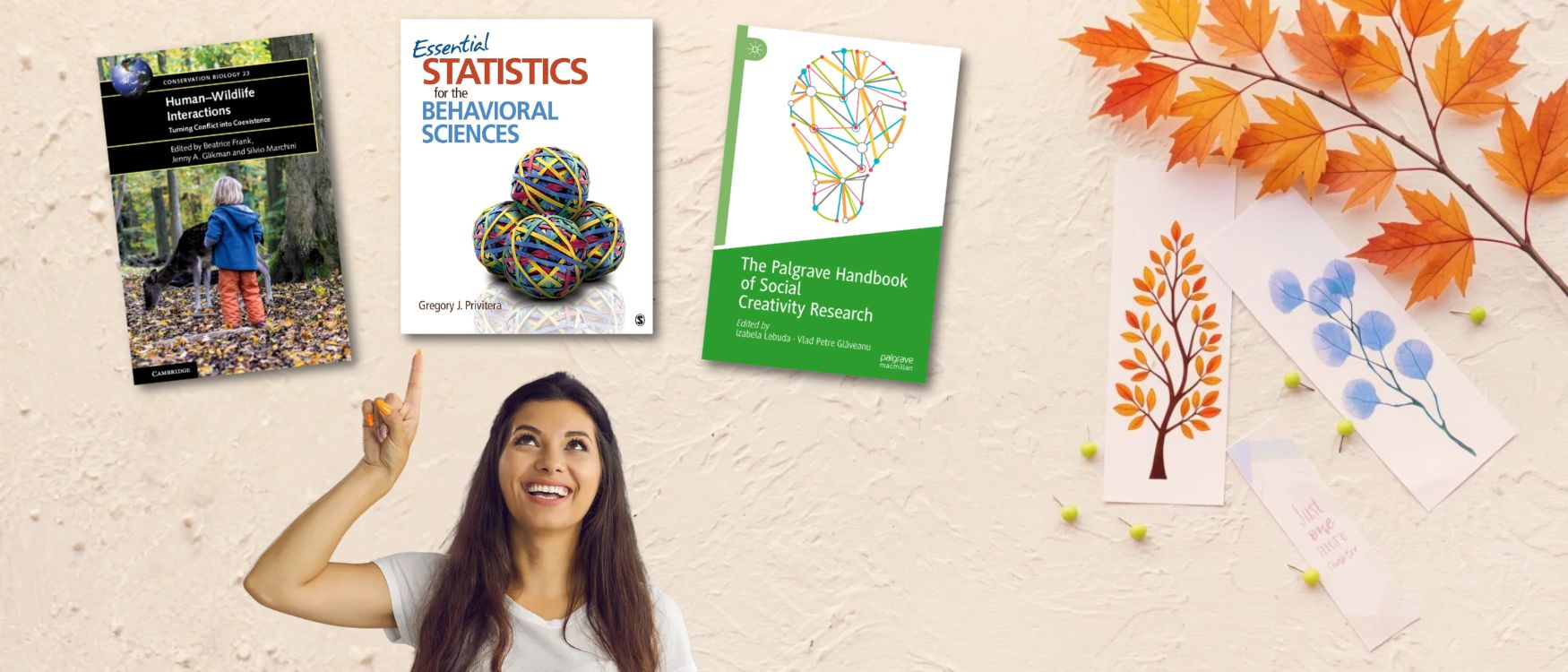
Human-Wildlife Interactions : turning conflict into coexistence
ed. by Beatrice Frank, Jenny A. Glikman, Silvio Marchini
Human-wildlife conflict (HWC) is one of the most complex and urgent issues facing wildlife management and conservation today. Originally focused on the ecology and economics of wildlife damage, the study and mitigation of HWC has gradually expanded its scope to incorporate the human dimensions of the whole spectrum of human-wildlife relationships, from conflict to coexistence. Having the conflict-to-coexistence continuum as its leitmotiv, this book explores a variety of theories and methods currently used to address human-wildlife interactions, illustrated by case studies from around the world. It presents some key concepts in the field, such as values, emotions, social identity and tolerance, and a variety of insights and solutions to turn conflict into coexistence, from individual level to national scales, including conservation marketing, incremental and radical innovation, strategic planning, and socio-ecological systems. This volume will be of interest to a wide range of readers, including academics, researchers, students, practitioners and policy-makers.
Essential Statistics for the Behavioral Sciences
Gregory J. Privitera
Employing the hallmark pedagogical support of his successful comprehensive text, award-winning author, teacher, and advisor Gregory J. Privitera offers a brief and engaging introduction to the field with Essential Statistics for the Behavioral Sciences. Practical examples, integrated SPSS® coverage and screenshots, and numerous learning tools make intimidating concepts accessible. Students will welcome Privitera′s clear instruction, conversational voice, and application of statistics to current, real-life research problems.
The Palgrave Handbook of Social Creativity Research
ed. by Isabela Lebuda, Vlad Petre Géaveanu
This Handbook brings together an international cast of experts to explore the social nature and context of creativity studies, focusing on methodology as a key component in advancing the social study of creativity. Two decades on from the pioneering work of Alfonso Montuori and Ronald E. Purser, the authors present a timely appraisal of past and present work in social creativity studies, and look ahead to future developments within this field. The authors collectively offer a rigorous examination of the methodological and empirical issues and techniques involved in studying social creativity. They examine the phenomenon as a form of communication and interaction within collaborative relationships; contending that creativity happens not within a vacuum but instead from a nexus of personal, social and contextual influences.