
2026-06-24 14:50
New books available in the Library and Information Centre.
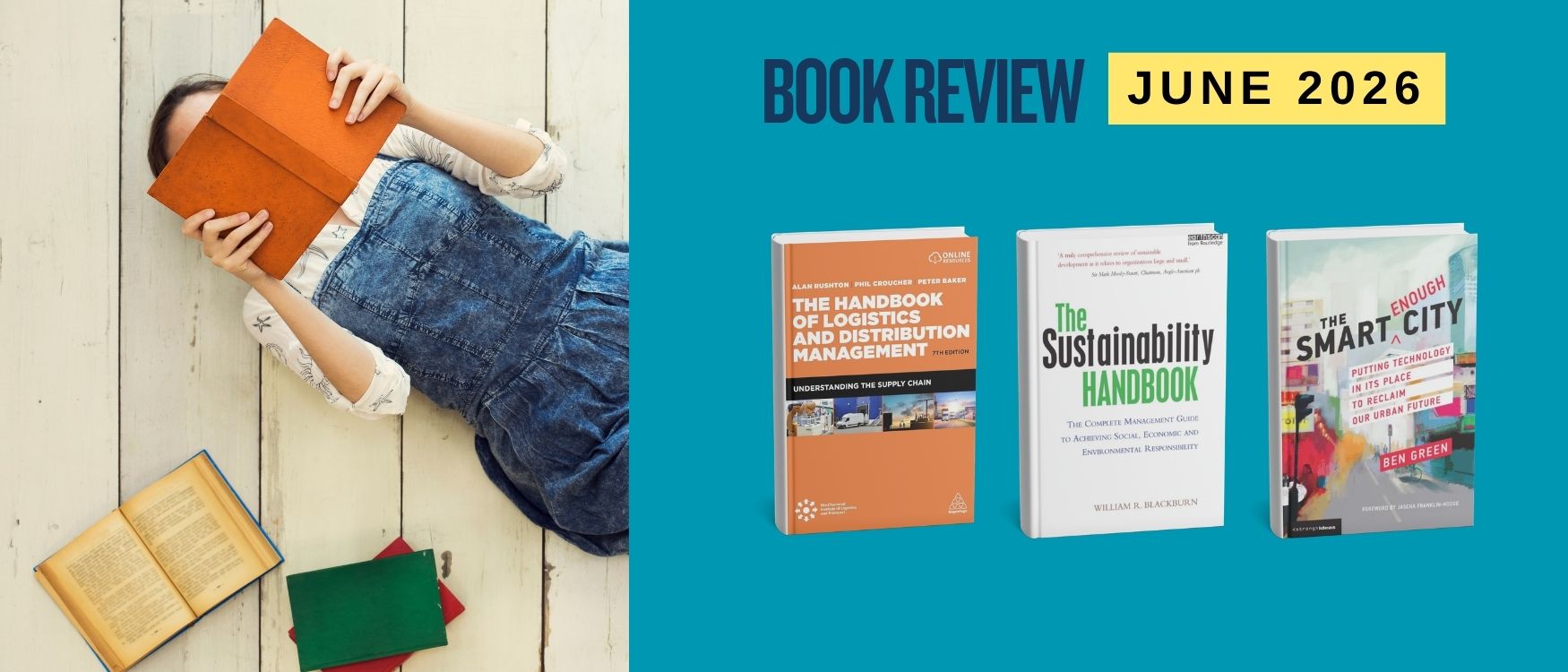
The Handbook of Logistics and Distribution Management: Understanding the Supply Chain
Alan Rushton, Phil Croucher, Peter Baker
Fully grasp the core principles of logistics, distribution management and the supply chain, in addition to emerging trends and the latest technologies, with this definitive guide that offers clear and straightforward explanations.
The Handbook provides practitioners and students with a complete, step-by-step overview of the many different aspects of setting up, managing and optimizing supply chains. Designed to offer a full appreciation of how supply chains are planned and operated, it is structured logically and delves into topics in more clarity and detail than disparate collections of research papers. Integrating both strategic and tactical insights, this textbook is underpinned throughout by real-world data and worked examples that bring the concepts to life.
The seventh edition offers:
Updates and solutions designed to meet the challenges faced by those studying and working in the sector
New coverage of future supply chain related technologies, including artificial intelligence, data analytics, digital twins and autonomous mobile robots and how these can be used to optimize operations and increase productivity
Online resources including lecture slides (tables, images and formulae from the text), acronyms and abbreviations and infographics.
The Sustainability Handbook : The Complete Management Guide to Achieving Social, Economic and Environmental Responsibility
William R. Blackburn
The Sustainability Handbook provides a comprehensive overview of the challenges and opportunities that sustainability presents for businesses, governments and modern organizations. The book explains how economic performance, environmental responsibility and social accountability can be successfully integrated into everyday operations and long-term strategy. William R. Blackburn offers a practical framework that helps organizations move beyond theory and implement measurable sustainability practices. The guide presents clear methods for developing sustainability policies, improving operational efficiency and strengthening corporate responsibility initiatives. Readers will also find valuable insights into sustainability standards, codes and reporting systems that are widely used across industries. The book includes a broad collection of metrics and evaluation tools that help organizations measure progress and identify areas for improvement. Through practical examples and actionable recommendations, the author demonstrates how sustainability can become a competitive advantage rather than simply a regulatory obligation. The writing style remains accessible and well-structured, making complex sustainability concepts easier to understand for both professionals and decision-makers. In addition to strategic guidance, the handbook serves as a useful reference source with extensive supplementary materials and practical resources. The Sustainability Handbook is an essential resource for organizations seeking to build responsible, resilient and future-oriented operations in an increasingly sustainability-focused world.
The Smart Enough City: Putting Technology in Its Place to Reclaim Our Urban Future (Strong Ideas)
Ben Green
Why technology is not an end in itself, and how cities can be “smart enough,” using technology to promote democracy and equity.
Smart cities, where technology is used to solve every problem, are hailed as futuristic urban utopias. We are promised that apps, algorithms, and artificial intelligence will relieve congestion, restore democracy, prevent crime, and improve public services. In The Smart Enough City, Ben Green warns against seeing the city only through the lens of technology; taking an exclusively technical view of urban life will lead to cities that appear smart but under the surface are rife with injustice and inequality. He proposes instead that cities strive to be “smart enough”: to embrace technology as a powerful tool when used in conjunction with other forms of social change—but not to value technology as an end in itself.
In a technology-centric smart city, self-driving cars have the run of downtown and force out pedestrians, civic engagement is limited to requesting services through an app, police use algorithms to justify and perpetuate racist practices, and governments and private companies surveil public space to control behavior. Green describes smart city efforts gone wrong but also smart enough alternatives, attainable with the help of technology but not reducible to technology: a livable city, a democratic city, a just city, a responsible city, and an innovative city. By recognizing the complexity of urban life rather than merely seeing the city as something to optimize, these Smart Enough Cities successfully incorporate technology into a holistic vision of justice and equity.